


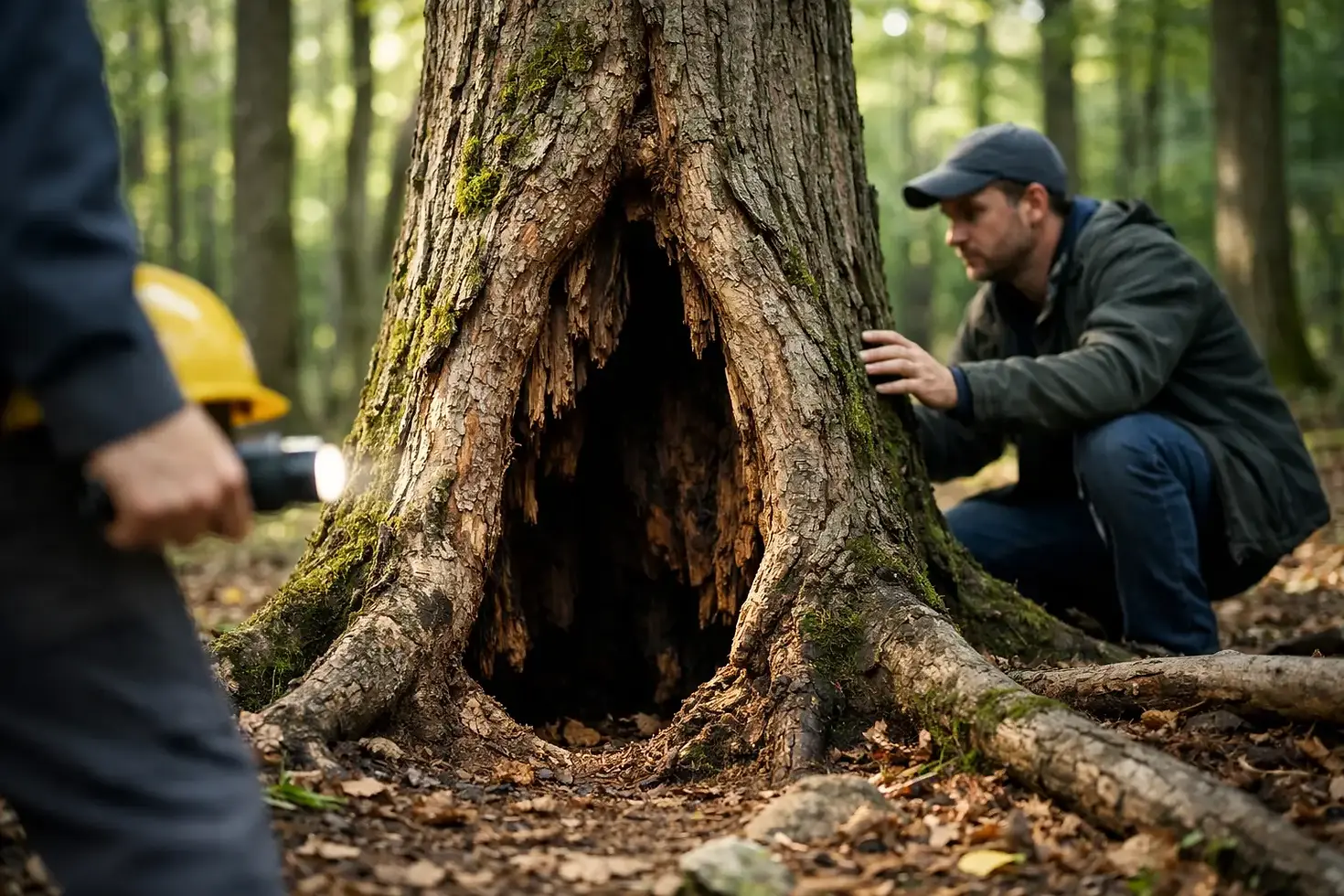
Are Hollow Trees Dangerous? Signs to Check

A tree can look healthy from the street while hiding years of decay inside its trunk. That is why homeowners often ask, are hollow trees dangerous? Sometimes they are, particularly when the hollow is large, decay has weakened critical roots or trunk wood, or the tree stands near a home, driveway, play area, or power line. But a hollow trunk does not automatically mean the tree must be removed.
The real question is whether the remaining healthy wood can safely support the tree's canopy and withstand Florida's heavy rain, high winds, and storm conditions. A professional assessment looks beyond the opening in the trunk to evaluate the tree's structure, location, species, and overall condition.
Are Hollow Trees Dangerous? It Depends on the Structure
Trees do not heal internal decay the way people heal a wound. Instead, a healthy tree may wall off damaged tissue and continue growing new wood around it. Over time, this can leave a hollow center with a ring of sound wood around the outside. Some older trees can remain standing for years with this structure.
The concern begins when decay removes too much of that supporting wood or spreads into a major branch union, the base of the trunk, or the roots. The outer shell may look solid, but it can split or fail when wind loads increase. In Tampa Bay, where seasonal storms can turn an ordinary weak point into an emergency, a hollow tree deserves prompt attention rather than guesswork.
Risk is also about what the tree could hit. A hollow tree in an open part of a large property may need monitoring and selective pruning. The same tree over a roof, parked vehicles, fence, pool enclosure, or neighbor's property may require more immediate action.
What Causes a Tree to Become Hollow?
Most hollow trunks begin with an injury that allows decay fungi to enter the wood. Common entry points include a broken limb, an old pruning cut, storm damage, lawn equipment wounds, insect activity, or damage at the root flare from construction or soil changes.
In Florida landscapes, moisture and heat can accelerate fungal activity. A tree may also be stressed by poor drainage, compacted soil, root damage, drought periods, or repeated improper trimming. Once decay organisms move into the wood, the visible cavity can grow slowly for years.
A hollow opening is not always the original problem. It is often the result of a much older injury. Filling cavities with concrete, foam, or other materials does not restore the tree's strength and can trap moisture or create new issues. The safest approach is to identify how much sound wood remains and whether the tree can be managed responsibly.
Warning Signs That Raise the Risk
A cavity alone tells only part of the story. Look closely for changes that suggest the tree's ability to support itself has been compromised. A certified arborist can inspect these signs from the ground and, when needed, use specialized evaluation methods to assess internal condition.
Pay particular attention if you notice:
A large opening, soft or crumbly wood, mushrooms, or fungal growth on the trunk or near the base
Deep cracks, seams, bulging areas, peeling bark, or a hollow sound when the trunk is gently tapped
Dead or hanging limbs, thinning foliage, unusually small leaves, or a canopy that is declining on one side
A noticeable lean, fresh soil cracks, lifted roots, or exposed decayed roots around the tree's base
Decay where major limbs connect to the trunk, especially above a house, driveway, or common outdoor area
No single sign confirms failure is imminent. For example, mushrooms may indicate decay but do not reveal exactly how much structural wood is affected. A lean may be longstanding and stable, or it may be recent and dangerous. Several warning signs together, especially after a storm, call for a timely inspection.
Why the Location Matters as Much as the Hollow
Arborists evaluate tree risk by considering both the likelihood of failure and the consequences if it happens. A decayed tree with no nearby target may present a lower overall risk than a smaller compromised tree hanging over a child's play set or a home's main entrance.
Consider the areas people use every day. Is the tree close enough to strike your roof, garage, screened enclosure, utility line, vehicle, or a neighboring property? Does it shade a patio where family members gather? Is it near a sidewalk or shared access lane on a rental or managed property? These details help determine whether monitoring, pruning, support systems, or removal is the appropriate recommendation.
Do not try to judge the danger by tree size alone. A small tree with a severely decayed base can fail suddenly, while a mature tree with a contained cavity and a strong outer shell may be manageable with ongoing care. Tree species, growth pattern, root health, and wind exposure all matter.
What to Do If You Find a Hollow in Your Tree
Start by keeping people, vehicles, and outdoor equipment out of the area beneath questionable limbs. If you see a new lean, a splitting trunk, hanging branches, lifted roots, or storm-related damage, treat it as an urgent situation. Do not climb the tree, cut major limbs yourself, or park beneath it while waiting for help.
Take a few clear photos from a safe distance and note any recent changes. Has the cavity expanded? Did the tree lose branches during a recent storm? Is there fresh sawdust, fungal growth, or bark falling away? This information can help during an on-site assessment, but it should not replace one.
Avoid covering the hollow or attempting a cosmetic repair. Paint, cement, and filler do not stop internal decay or make a compromised trunk structurally sound. Removing random branches can also make matters worse by creating larger wounds or leaving the canopy unbalanced.
How a Certified Arborist Evaluates a Hollow Tree
A qualified arborist begins with the whole tree, not just the cavity. The inspection includes the trunk, root flare, canopy, branch attachments, soil conditions, and surrounding targets. The arborist will also consider whether the tree has enough healthy tissue to remain stable and whether pruning can reduce wind resistance without harming long-term health.
Possible recommendations range from routine monitoring and deadwood removal to selective weight reduction, cabling or bracing in limited situations, or complete removal. Support systems are not a cure for severe decay, and they are not right for every tree. When a tree has extensive trunk or root decay and a high-value target below it, removal is often the most responsible option.
A good recommendation should explain the reason for the work in plain language. Homeowners deserve to know whether the goal is to preserve a healthy tree, reduce a manageable hazard, or prevent a foreseeable failure before severe weather arrives.
When to Call for Emergency Tree Service
Call for prompt professional help when a hollow tree develops a sudden lean, visible splitting, broken major limbs, root movement, or damage after high winds. The same is true if it is touching or threatening a power line. Keep everyone clear and contact the utility provider when electrical lines are involved. Never attempt to move branches from energized wires.
For non-emergency concerns, scheduling an assessment before storm season gives you more options and less pressure. Campbell's Noble Tree Service LLC helps property owners throughout Clearwater and the Tampa Bay area understand whether a hollow tree can be safely maintained or needs action to protect the property.
A hollow tree is not automatically a lost tree, but it is a reason to pay closer attention. Acting early can preserve a valuable mature tree when appropriate, or prevent a damaged one from becoming the next problem on your property.


Comments