


Clearwater Hazardous Tree Removal Service
- Ignite Fareal
- Jul 7
- 6 min read

A tree does not have to fall to become a serious problem. In Clearwater, one split trunk, one storm-weakened limb, or one root system lifting out of saturated soil can put a roof, driveway, fence, or family member at risk. That is why Clearwater hazardous tree removal service is not just about cutting down a tree. It is about identifying real danger early, choosing the safest removal method, and protecting the rest of your property in the process.
For many property owners, the hardest part is knowing when a tree has crossed the line from concerning to hazardous. A tree can still be leafy and look alive while carrying major structural defects. On the other hand, a storm-damaged tree may look dramatic but still be partly salvageable with the right pruning and support plan. That is where professional evaluation matters.
When a tree becomes a hazard
A hazardous tree is one that has a high likelihood of failing and causing damage or injury. That risk can come from disease, decay, storm damage, root failure, poor structure, lightning strikes, pest pressure, or years of improper pruning. In Florida, fast weather shifts and seasonal storms make those issues more urgent.
Some warning signs are easy to spot. Large dead limbs hanging over a driveway or roof are an obvious concern. A trunk that is suddenly leaning after heavy rain is another. Cracks in the main stem, hollow sections, mushrooms growing at the base, and exposed roots can all point to internal weakness.
Other signs are less obvious to the untrained eye. A canopy may thin out on one side because of root damage. Codominant stems with included bark may look sturdy but can split under wind load. A tree with old wound sites may have internal decay hidden behind sound-looking bark. This is why hazard removal is rarely a simple yes-or-no decision based on appearance alone.
Why Clearwater hazardous tree removal service matters
In a region where wind, rain, and saturated ground can change conditions quickly, delaying action creates risk. A hazardous tree near a home does not become safer by waiting another season. It becomes less predictable.
For homeowners, the cost of waiting can show up in several ways. There is the obvious threat to roofs, vehicles, pools, and utility lines. There is also personal liability if a neglected tree causes preventable damage. For landlords and property managers, there is the added responsibility of maintaining safe conditions for tenants and visitors.
The other reason prompt service matters is access. A compromised tree is usually easier and safer to remove before it fully fails. Once a tree collapses into a structure, over a fence line, or across a tight backyard, removal becomes more complex and costly. Preventive action is often the cleaner solution.
Not every dangerous tree needs the same approach
Hazardous tree work is not one-size-fits-all. Sometimes the safest choice is full removal. Sometimes selective limb removal reduces the immediate threat while preserving the tree. Sometimes the best recommendation is urgent removal of one tree and monitoring of another nearby tree that shares similar conditions.
That depends on the species, age, location, defect type, and what the tree could hit if it fails. A decayed pine leaning over a house is a different problem than a storm-damaged oak standing in an open side yard. The first may require immediate dismantling with controlled rigging. The second might allow a more straightforward removal plan.
A certified arborist looks beyond the tree itself and evaluates the target zone, drop area, equipment access, soil conditions, surrounding structures, and whether nearby trees may also be affected. That level of planning is what makes hazardous work safer for everyone involved.
What professional hazardous tree removal should include
A reliable Clearwater hazardous tree removal service starts with a clear on-site assessment. The goal is to understand whether the tree is truly unsafe, how urgent the situation is, and what removal method will control risk instead of adding to it.
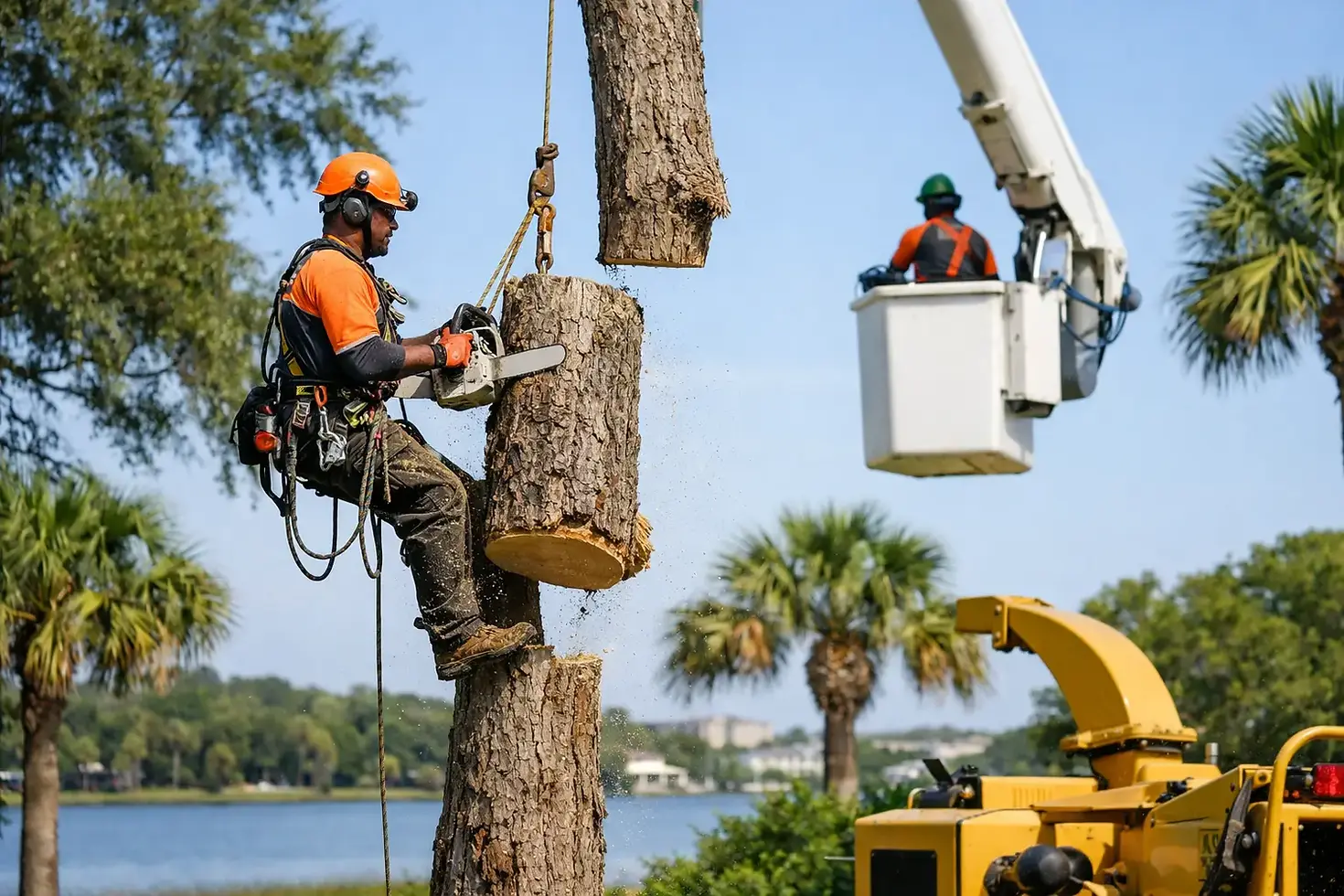
From there, the work should be handled with the right equipment and crew coordination. Hazardous removals often require sectional dismantling rather than simply felling a tree from the base. Limbs may need to be lowered carefully to avoid impact on roofs, patios, sheds, or landscaping. In tight residential spaces, precision matters more than speed.
Cleanup is also part of professional service, not an extra detail. After removal, the site should be cleared of debris, and the property should be left in a condition that feels orderly and safe. If stump grinding is needed, that should be discussed as part of the overall plan rather than treated as an afterthought.
For emergency situations, responsiveness matters just as much as technical skill. When a tree has partially failed, split, or dropped onto a structure, fast arrival and sound judgment can prevent further damage.
Signs you should call sooner rather than later
Some tree problems can wait for a scheduled estimate. Others deserve immediate attention. If a tree is leaning more than it used to, especially after a storm, call. If a large limb is cracked and suspended overhead, call. If roots are lifting the soil plate on one side of the tree, or the trunk has a fresh vertical split, call.
The same goes for trees touching power lines, trees with major storm breakage, or trees dropping large deadwood without warning. Even if the tree is still standing, those are not conditions to monitor casually from month to month.
There is also a middle category where timing still matters. Trees with visible decay, recurring limb failure, heavy canopy imbalance, or signs of pest-related decline may not be in immediate collapse mode, but they should be professionally assessed before the next storm system pushes them over the edge.
Why certified arborist input makes a difference
Hazard removal is often treated like a simple cutting job, but the real value is in judgment. A certified arborist is trained to assess structure, species behavior, decay indicators, and failure potential. That means better recommendations, not just bigger saws.
This matters because unnecessary removals are costly, while delayed removals can be dangerous. A qualified professional helps property owners avoid both mistakes. You get a clearer answer on whether the tree should come down now, be pruned and monitored, or be preserved with corrective care.
It also matters for the health of the surrounding landscape. Removing one hazardous tree can expose neighboring trees to new wind loads or sun stress. An experienced crew plans for that and helps you think beyond the single tree that is causing the immediate concern.
Choosing a hazardous tree removal company
When you are comparing providers, look for more than availability. Hazardous tree work should be performed by a company that prioritizes safety, carries itself professionally on-site, and communicates clearly about the process. You want a team that explains what they found, what they recommend, and how they will protect your home and property during removal.
It is fair to ask whether the company has certified arborist expertise, whether they handle emergency situations, and whether cleanup is included. It is also reasonable to ask how they approach trees near structures, fences, or confined backyard spaces. A vague answer is not a reassuring one.
A dependable local company should also understand the tree and weather conditions common to this area. In Clearwater and the surrounding Tampa Bay region, that local experience helps crews anticipate storm-related damage patterns, access issues, and the urgency that can come with coastal weather changes. Campbells Noble Tree Service LLC builds its work around that combination of arborist knowledge, safe execution, and responsive service.
The goal is safety, not just removal
The best hazardous tree service does more than eliminate a visible problem. It reduces liability, restores peace of mind, and helps property owners make smarter decisions about the rest of their landscape. Sometimes that means removing a tree that has reached the end of its safe life. Sometimes it means catching a serious issue before it becomes an emergency.
If you are looking at a cracked trunk, a leaning tree, or storm damage that does not look right, trust that instinct and have it evaluated. Tree hazards rarely improve on their own, and the safest window to act is usually before the next hard wind reminds you the problem is still there.


Comments