


Guide to Residential Tree Removal
- Ignite Fareal
- Jul 6
- 6 min read

A tree can go from asset to liability faster than most homeowners expect. One season it provides shade and curb appeal. After a storm, disease issue, or root problem, it may be leaning over a roof, dropping heavy limbs, or threatening a fence line. This guide to residential tree removal explains how to think through that decision carefully, what the process usually involves, and when professional help is the safest choice.
When tree removal is the right call
Not every problem tree needs to come down. In many cases, pruning, cabling, pest treatment, or soil care can extend a tree's life and reduce risk. That said, there are situations where removal is the responsible option.
A dead tree is one of the clearest examples. Dead wood becomes brittle, unstable, and unpredictable, especially in Florida's wind and storm conditions. The same is true for trees with major trunk cracks, severe hollowing, root plate movement, or extensive decay at the base. If the structure is compromised, keeping the tree may create more risk than value.
Removal also makes sense when a tree is causing repeated property damage. Roots may lift driveways, interfere with plumbing, or destabilize hardscapes. A canopy may overhang a home too heavily or interfere with power service lines. In some cases, the tree is healthy but poorly located for the lot, and the long-term cost of keeping it outweighs the benefit.
The hard part is that the answer is not always obvious. A tree can look rough and still be recoverable. Another can appear green and full while hiding serious internal decay. That is why a site-specific assessment matters.
A practical guide to residential tree removal decisions
The first step is not cutting. It is diagnosis. Before any removal is scheduled, the tree should be evaluated for species, condition, structural defects, proximity to structures, and the surrounding drop zone. A certified arborist can help determine whether the issue is truly irreversible or whether pruning and treatment could solve the problem.
This matters for both safety and cost. Removing a mature tree is a bigger project than trimming it, and once it is gone, it is gone. Homeowners sometimes assume removal is the quickest fix, but preserving a stable tree can be the better investment when the tree still has sound structure and manageable defects.
On the other hand, waiting too long can make removal more dangerous and more expensive. A tree that is leaning more each season, losing major limbs, or showing root failure may require emergency work later if it is not addressed early. Planned removal is usually safer than urgent removal after failure has started.
What happens during residential tree removal
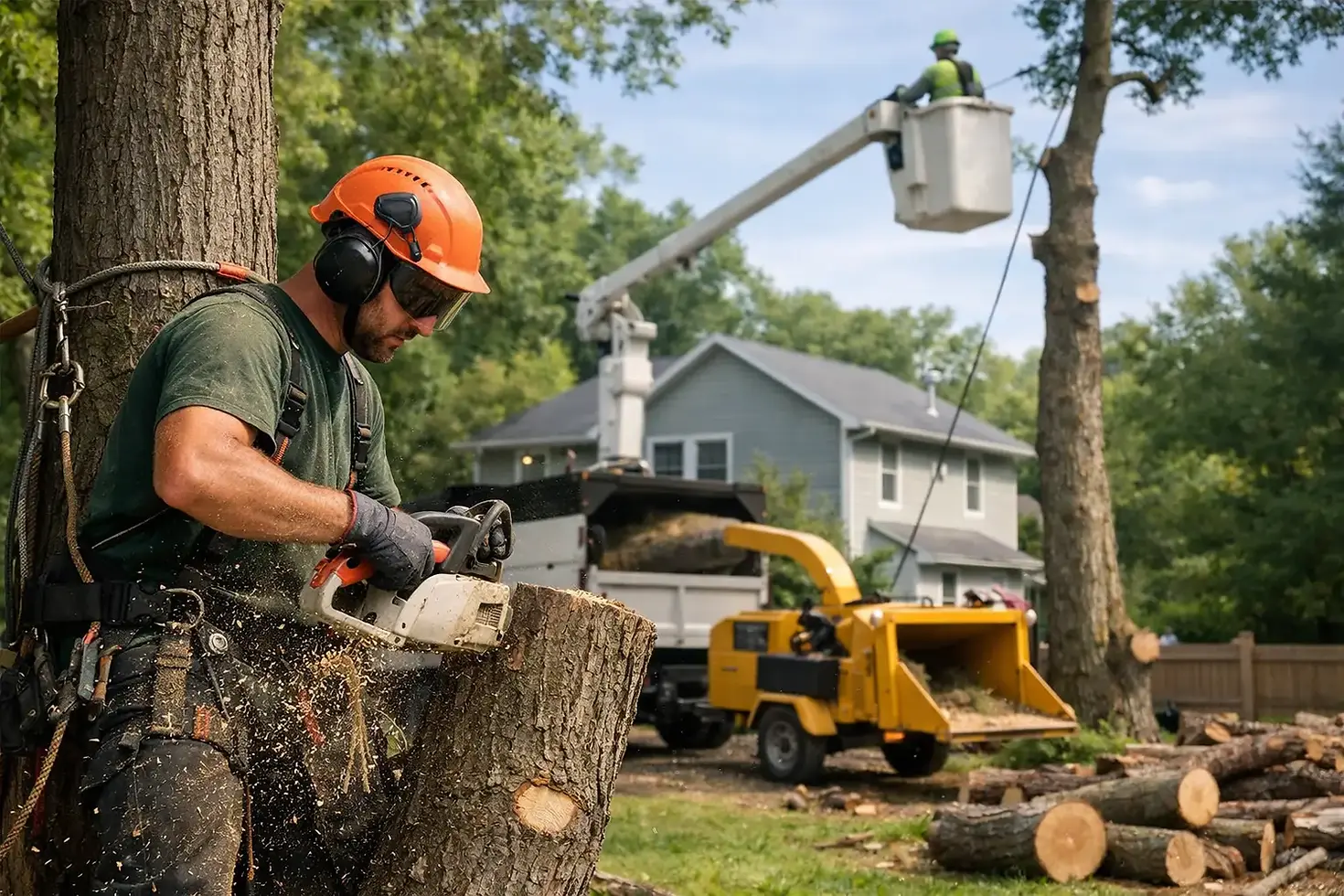
A professional removal begins with a property review and a clear work plan. The crew looks at access points, nearby structures, fencing, utilities, and the safest direction for lowering sections. On residential lots, large trees are rarely dropped in one piece. They are typically dismantled in sections using ropes, rigging, climbing systems, lifts, or cranes depending on the site.
The canopy is often removed first, then the trunk is taken down in manageable pieces. Each cut is planned to control movement and protect the house, driveway, landscape beds, and neighboring property. That controlled approach is one reason residential tree removal should not be treated like a standard yard project.
After the tree is down, the remaining wood and debris are hauled away or processed on site. Many homeowners also request stump grinding so the area can be leveled, replanted, or restored. Full cleanup should be part of the conversation from the start so there are no surprises about what is left behind.
Safety is the part homeowners should take seriously
Tree removal looks straightforward from the ground. In reality, it combines chainsaw work, elevated cutting, weight distribution, rigging tension, and unpredictable tree movement. Add storm damage or decay, and the risk increases quickly.
For that reason, DIY removal is rarely a good idea for anything beyond very small trees in wide open space. If the tree is near a home, fence, shed, pool enclosure, or service line, professional equipment and training are worth it. A mistake does not just damage the tree. It can damage a roof, injure someone, or create liability with a neighbor.
This is also where credentials matter. A certified arborist brings more than cutting ability. They understand tree structure, failure patterns, and how to make decisions based on health and hazard, not guesswork. For homeowners, that means a safer process and a clearer explanation of what needs to happen.
Permits, utilities, and neighborhood concerns
One of the more overlooked parts of any guide to residential tree removal is paperwork and coordination. Depending on your municipality, tree species, and property conditions, a permit may be required before removal. Rules can vary by city and county, especially for protected trees or trees of a certain size.
If a tree is close to utility lines, that adds another layer. Homeowners should never attempt to manage branches near energized lines themselves. Utility coordination may be necessary before work can begin, and a professional tree service can help identify that issue early.
There is also the practical side of neighborhood access. On tighter residential lots, crews may need space for equipment, trucks, or debris staging. Thinking through gate width, parking, and shared boundaries ahead of time can make the job smoother and help avoid disruption.
What affects the cost of removal
Homeowners understandably want a straight price, but tree removal costs depend on several factors. Size is a major one. A small ornamental tree in an open yard is a very different project from a large oak overhanging a roof. Height, trunk diameter, spread, and total weight all affect labor and equipment needs.
Location matters just as much. Trees in confined spaces take more time because every section must be lowered with precision. Condition matters too. A storm-damaged or decayed tree may require extra caution because the wood cannot be trusted to behave normally during cutting.
Stump grinding, debris hauling, crane use, and emergency scheduling can also change the final price. The most useful estimate is one based on an in-person inspection, not a guess over the phone. A reputable company should explain what is included, how cleanup is handled, and whether stump work is separate.
After the tree is gone
Removal solves one problem, but it can reveal others. You may be left with a stump, exposed roots, a bare patch in the lawn, or a gap in shade coverage that changes how the yard functions. That is normal, and it is worth planning for.
If the stump remains, it can continue to take up usable space and may become a tripping hazard or attract pests as it breaks down. Grinding is often the cleanest next step for residential properties. It improves appearance and makes the area easier to landscape.
You may also want advice on whether to replant. In many cases, replacing a removed tree with a better-suited species is a smart long-term move. The key is matching the species to the space so the next tree does not create the same issues 15 years from now.
Choosing the right company for the job
Residential tree removal is one of those services where professionalism shows quickly. You want a company that communicates clearly, inspects the site carefully, and does not rush to remove a tree that could be saved. You also want proof of insurance, proper equipment, and a cleanup plan that respects your property.
For homeowners in Clearwater and the surrounding Tampa Bay area, local experience matters because storm exposure, sandy soils, and fast-growing species create conditions that are different from other regions. A company like Campbells Noble Tree Service LLC understands those local pressures and approaches tree work with safety, certified expertise, and property protection in mind.
If a company gives a one-size-fits-all answer without looking closely at the tree, that is a reason to slow down. Good tree care is rarely about the fastest cut. It is about making the right call for the tree, the home, and the people living around it.
When you are unsure whether a tree should stay or go, start with a professional assessment rather than a worst-case assumption. The right answer is the one that keeps your property safe without removing more than necessary.


Comments