


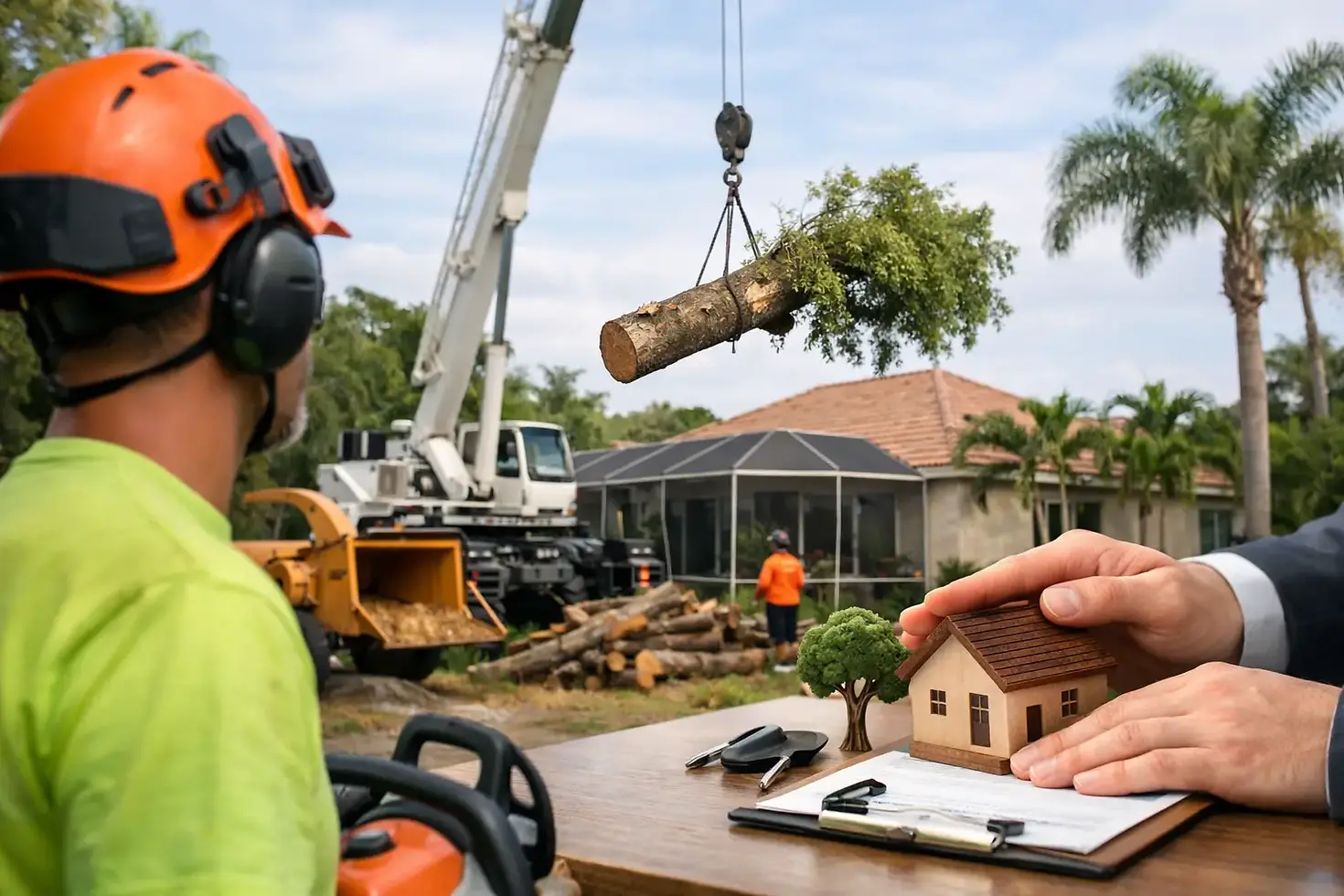
Tree Removal Insurance for Florida Homeowners

A large oak leaning over a roof after heavy rain creates two urgent questions: Is the property safe, and who pays for removal? Tree removal insurance can help in certain situations, but coverage depends on why the tree fell, what it damaged, and the specific policy in place. For homeowners across Tampa Bay, knowing the difference before storm season or a tree emergency can prevent costly surprises.
A professional tree company should carry its own insurance as well. That protection is separate from a homeowner's policy and matters whenever a crew, truck, climber, or piece of equipment is working near your home, fence, pool, or neighboring property.
What Tree Removal Insurance May Cover
Most homeowners insurance policies cover sudden, accidental damage from a fallen tree or limb when it strikes a covered structure. That may include your home, garage, shed, fence, or another insured building, subject to your deductible and policy limits. A tree that falls on a roof during a windstorm, for example, may trigger coverage for both the structural damage and at least part of the debris removal.
The cause of the fall matters. Wind, lightning, and the weight of ice are commonly treated differently from gradual decline, neglect, or normal aging. In Florida, high winds and saturated soil can cause even healthy-looking trees to fail. Insurers typically look at the event, the resulting damage, and the wording of the policy rather than making a decision based only on the tree's size or species.
Removal coverage is often tied to property damage. If a fallen tree blocks a driveway but does not damage an insured structure, removal may not be covered under a standard policy. Some policies provide limited coverage for clearing a tree that blocks a driveway or a ramp used by someone with a disability, but limits and eligibility vary. A tree that lands in an open yard, even after a storm, may be the owner's responsibility.
This is why it is wise to review your declarations page before an emergency occurs. Look for deductibles, debris-removal limits, windstorm provisions, and exclusions. Your insurance agent or carrier can explain your individual coverage. A tree service can assess the hazard and provide documentation of the work, but it cannot determine what your insurer will approve.
When Homeowners Usually Pay Out of Pocket
Not every removal is an insurance claim. Routine removal of a declining tree, pruning of overextended limbs, stump grinding, and removal for landscaping or renovation purposes are generally maintenance expenses. Insurance is designed for sudden covered losses, not routine property upkeep.
A dead tree is a good example of the gray area. If a clearly dead tree has been standing over a house for months and later falls during ordinary weather, an insurer may question whether the risk should have been addressed sooner. The outcome can depend on the policy, the condition of the tree, the weather event, and available evidence. Waiting until a known hazard fails can also put people, structures, and neighboring property at risk.
Preventive tree care is often less expensive and far less disruptive than emergency cleanup. An ISA-certified arborist can identify decay, root problems, pest damage, poor branch attachments, and canopy imbalance that may not be obvious from the ground. In many cases, strategic pruning can reduce risk while preserving a healthy tree. In others, removal is the responsible option.
Homeowners Insurance vs. Tree Company Insurance
Homeowners sometimes assume that hiring a professional automatically means their own insurance is irrelevant. In reality, both types of coverage serve different purposes.
Your homeowners policy may respond when a covered event damages your property. A qualified tree service's insurance is meant to protect against losses connected to its operations. If a worker is injured, equipment damages a structure, or an accident occurs during the job, the contractor's coverage may be the first line of protection for that work-related incident.
Before scheduling tree removal, ask the company whether it carries current general liability insurance and workers' compensation coverage. Request proof of insurance, not just a verbal assurance. A reputable company should be prepared to provide documentation and explain the scope of work, access needs, safety precautions, and cleanup plan.
General liability insurance helps address accidental property damage caused by the contractor's work. Workers' compensation is especially significant because tree removal is physically demanding and inherently hazardous. If an uninsured worker is hurt on your property, the homeowner could face unnecessary exposure depending on the circumstances and applicable law.
Price should not be the only deciding factor. An unusually low estimate may leave out insurance, trained personnel, proper equipment, debris hauling, or safe rigging practices. A complete quote should make clear what will be removed, whether wood and brush will be hauled away, how the area will be protected, and whether stump grinding is included or priced separately.
What to Do When a Tree Falls
After a tree falls, personal safety comes first. Stay clear of downed power lines, damaged roofs, hanging limbs, and trees that are partially uprooted or still under tension. Call 911 or the utility provider if electrical lines are involved. Do not attempt to cut branches resting on a roof or tangled in wires.
If the property is safe to approach, take photos and short videos before debris is moved. Capture the tree, damaged structures, the surrounding area, and any visible storm conditions. Keep receipts for reasonable emergency measures, such as temporary tarping or boarding, if those steps are necessary to prevent further damage.
Then notify your insurer promptly and arrange a professional assessment. If a tree is on a roof, fence, vehicle, pool enclosure, or access point, the insurer may want documentation before final removal. That does not mean you should leave an active hazard in place. Emergency work can be necessary to prevent additional damage, but clear photographs and communication with the carrier can make the claim process easier.
For a tree that has not fallen but appears unstable, do not wait for the next storm to decide. Warning signs include fresh cracks in the trunk, lifting soil around the base, sudden leaning, large dead limbs, mushrooms near roots, and branches hanging over occupied areas. These conditions deserve a prompt, on-site inspection.
Special Considerations for Neighboring Trees
Florida homeowners also need to consider where a tree originates and where it lands. If your healthy tree falls during a storm onto a neighbor's home, the neighbor's insurance may generally handle damage to the neighbor's covered property. If there was known decay or an obvious hazard that was ignored, liability can become more complicated.
The same principle applies when a neighbor's tree damages your home. Avoid assuming that the neighbor automatically pays simply because the trunk was on their land. Document the damage, contact your insurer, and keep conversations with neighbors factual and calm. If there were prior concerns about a hazardous tree, written records, photos, and professional assessments may be relevant.
Do not arrange major work on a boundary tree without clarifying ownership and access. A professional crew can help identify practical removal options, but property-line questions may require agreement between owners or additional guidance before work begins.
Protect Your Property Before the Claim Is Necessary
The best insurance outcome is often the one you never need to use. Regular inspections, correct pruning, removal of dead or structurally compromised trees, and prompt attention after severe weather all reduce the chance of preventable damage. They also help keep driveways, roofs, utility areas, and outdoor living spaces safer for the people who use them.
For Clearwater and Tampa Bay property owners, Campbells Noble Tree Service LLC provides professional assessments, safety-focused tree removal, and complete cleanup when a tree becomes a concern. Whether the need is preventive care or urgent storm response, a clear evaluation from a qualified arborist can help you make a sound decision before a small concern turns into a larger loss.


Comments