


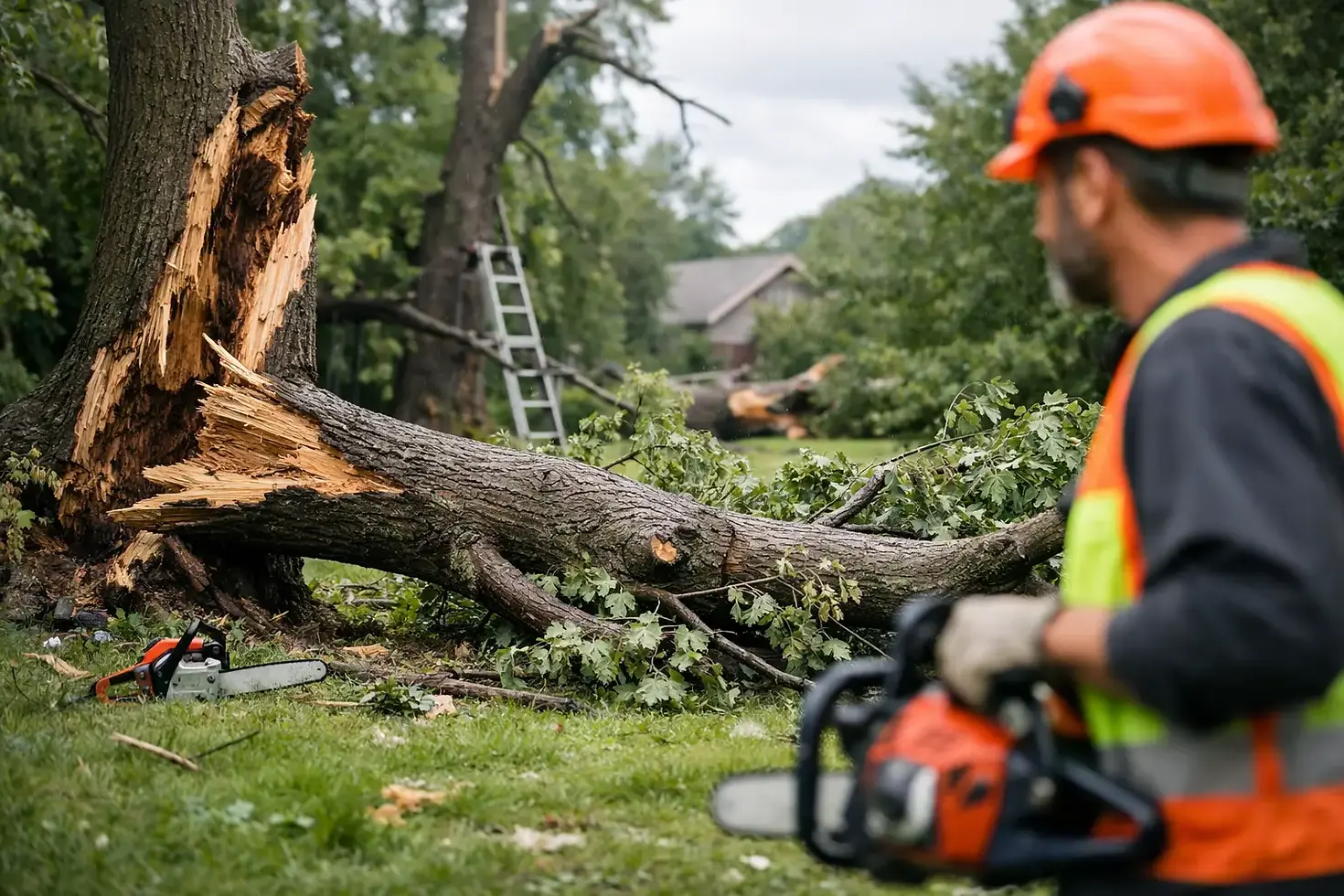
What to Do After a Storm Damaged Tree

The morning after a strong Florida storm, the tree in your yard can look very different from the one you went to bed with. A cracked limb over the driveway, a split trunk near the house, or roots starting to lift are all signs you need a plan fast. If you are wondering what to do after storm damaged tree problems show up on your property, the first priority is simple: protect people, avoid making the damage worse, and get a qualified assessment before cleanup turns into a bigger risk.
What to do after storm damaged tree damage is found
Start by treating every damaged tree as unstable until proven otherwise. A branch that looks hung up can drop without warning, and a trunk that only looks slightly split may fail hours later. Keep children, pets, and vehicles away from the area, and do not stand under leaning limbs to get a closer look.
If the tree is touching a power line or has fallen onto utility equipment, stay back and call the utility company right away. This is not a DIY situation, even if the branch seems small. Wet ground, hidden tension in the wood, and energized lines can turn a manageable storm problem into a serious emergency.
Once the area is secure, take clear photos from a safe distance. Capture the whole tree, the damaged sections, anything hit by the tree, and the surrounding area. These photos can help with insurance documentation and also give an arborist a better starting point when deciding whether the tree can be saved or needs removal.
Check the type of damage before touching anything
Not all storm damage means a tree has to come down. Some trees lose limbs and recover well with proper pruning. Others are structurally compromised and become ongoing hazards. The difference often comes down to where the damage occurred and how much of the tree was affected.
A few broken outer branches are very different from a trunk split that runs into the main stem. A small lean in a tree that has leaned for years is different from a sudden lean with cracked soil at the base. If you see exposed roots, fresh ground lifting, or a tree now resting against another tree, there is usually more going on than what is visible from one angle.
This is where homeowners often make an understandable mistake. They assume that if the tree is still standing, it is stable enough to trim later. In reality, storm-damaged trees can fail after the wind has stopped. Internal cracking, twisted limbs, and root damage may not be obvious until the next storm or even a normal windy afternoon.
What you should not do
After a storm, many property owners want to get the mess cleaned up right away. That instinct makes sense, but some of the most dangerous decisions happen during early cleanup.
Do not climb the tree, get on a ladder near damaged limbs, or start cutting branches that are bent, pinned, or hanging under tension. Storm-damaged wood stores energy in unpredictable ways. A branch can spring, roll, or drop as soon as it is cut.
Do not park under the tree or move patio furniture, grills, or equipment into the area because it looks shaded and usable again. If there is visible damage, the safest assumption is that more movement is possible.
And do not top the tree as a quick fix. Removing large sections of canopy without proper pruning cuts can make the tree weaker, not safer. Poor cuts also leave larger wounds, which can increase decay and future breakage.
When to call a certified arborist right away
Some storm damage can wait a day for inspection. Some cannot. You should call for professional help immediately if the tree is leaning toward the home, blocking access, resting on a structure, split through the trunk, tangled with utility lines, or shedding large limbs.
You should also call promptly if the root plate appears lifted or the soil is cracking around the base. In Florida’s storm-prone conditions, root failure is a major concern, especially with saturated ground. A tree may remain upright for the moment and still be close to collapse.
A certified arborist looks beyond the obvious break. They assess the trunk, branch unions, root flare, canopy loss, and species-specific recovery potential. That matters because saving a valuable shade tree is often possible, but only when the structure is still sound and corrective pruning is done correctly.
For homeowners in the Tampa Bay area, quick response matters after heavy wind and rain because delays can increase both liability and cleanup costs. Emergency tree service is not just about removing what already fell. It is also about stabilizing what is next in line to fail.
Can the tree be saved or does it need removal?
This depends on the extent of damage, the tree species, its age and condition before the storm, and where it is located on the property. A healthy tree that lost one major limb may recover well with strategic pruning and follow-up care. A tree with a severe trunk split, major root damage, or more than half the canopy destroyed is often a poor candidate for recovery.
Location matters too. A damaged tree deep in a backyard open area may be monitored if the risk is low and the structure is still reasonably intact. The same tree leaning over a roof, driveway, or neighboring fence line is a different decision because the consequences of failure are much higher.
There is also a long-term property care angle here. Trying to save a tree at all costs can be more expensive than removing it if the damage has created permanent structural weakness. On the other hand, removing a tree too quickly without expert review can mean losing a mature tree that could have recovered and continued adding shade, privacy, and value to the property.
What to expect during professional storm damage service
A proper visit usually starts with a site safety review and damage assessment. The goal is to identify immediate hazards first, then determine what can be pruned, what must be removed, and what needs monitoring. In higher-risk situations, crews may use specialized equipment to dismantle damaged sections safely instead of dropping large pieces into tight spaces.
Cleanup matters more than many homeowners realize. Small debris can hide sharp splinters, unstable limbs, and damaged landscape features. A professional crew should remove the debris, leave the area clear, and explain any follow-up recommendations, such as pruning, cabling in select cases, stump grinding, or monitoring for decline over the next several months.
This is one reason many property owners prefer working with a company that handles both the emergency work and the cleanup. It reduces stress and helps restore safe use of the yard faster.
Insurance, documentation, and timing
If a tree damaged your home, fence, shed, or another insured structure, document everything before major work begins when it is safe to do so. Take photos of the tree, the point of impact, and the debris field. Keep notes on the date of the storm and the condition you observed afterward.
That said, do not delay urgent hazard removal just to wait for a perfect insurance process. If the tree presents an active danger, safety comes first. In many cases, insurers want homeowners to take reasonable steps to prevent further damage.
It also helps to ask for a written description of the damage and recommended work. Clear records can make the process easier, especially when there is a question about whether the tree was storm-damaged versus long-declining before the event.
After the emergency, think about prevention
Once the immediate danger is handled, it is worth asking why this tree failed and whether nearby trees have similar issues. Dense, unbalanced canopies, dead limbs, included bark, root problems, and deferred pruning often show up during storms because wind exposes weaknesses that were already there.
Preventive pruning is not about making trees look tidy. It is about reducing failure points, improving structure, and removing dead or weak limbs before weather does it for you. That is especially important for mature trees near homes, driveways, pools, and shared property lines.
Regular inspections can also catch disease, pest activity, and decline that make storm damage worse. In many cases, the best storm response starts months earlier with proper tree care.
If your property has storm-damaged trees and you are not sure what is safe, the right next step is to get experienced eyes on it. Campbells Noble Tree Service LLC helps homeowners make clear, practical decisions after storms, with safety, cleanup, and long-term tree health kept in view. A damaged tree can feel urgent and overwhelming, but the right response can protect both your property and the trees worth saving.


Comments