


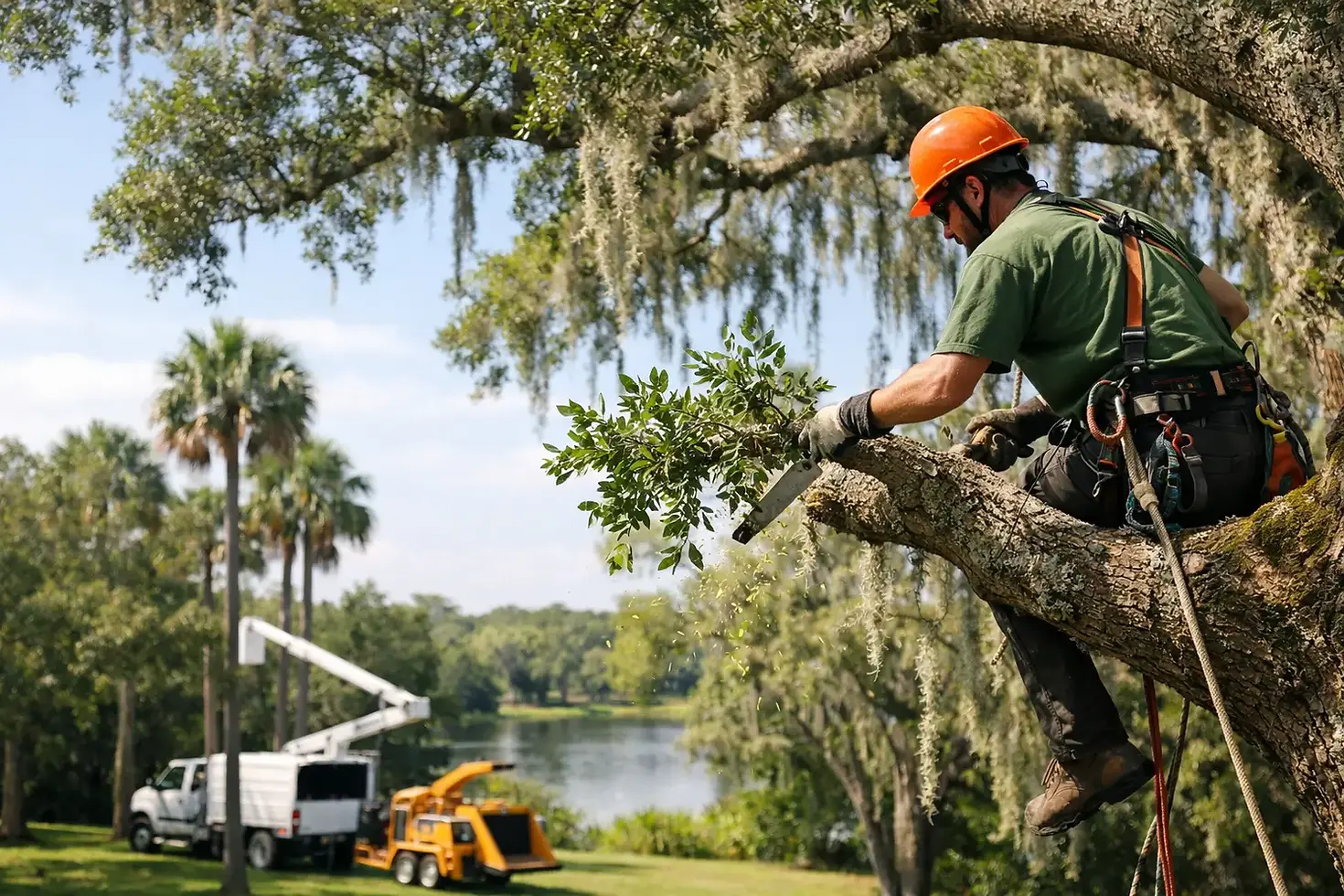
When to Trim Oak Trees in Florida

If you are wondering when to trim oak trees, the short answer is this: timing matters more than most property owners realize. Trimming at the wrong time can stress the tree, invite disease and pests, and create unnecessary risk around your home. In Florida, where heat, humidity, and storm season all affect tree care decisions, oak pruning should be planned carefully.
For many homeowners in Clearwater and the Tampa Bay area, mature oaks are one of the most valuable features on the property. They provide shade, add curb appeal, and can increase the overall character of a yard. But they also need the right kind of maintenance. Oak trees are strong, yet they are not a trim-anytime species.
When to Trim Oak Trees for Best Results
In most cases, the best time to trim oak trees is during the dormant season, typically in late fall through winter. This is when the tree is less actively growing, which helps reduce stress from pruning cuts. It also lowers the chance of attracting insects that can carry disease.
That timing is especially important with oaks because fresh cuts can make them vulnerable. A pruning wound may look small, but to pests and pathogens it can act like an open invitation. When trimming is done during lower-risk months, the tree generally has a better chance of recovering cleanly.
That said, Florida does not always follow the same seasonal pattern as colder states. Growth can continue longer, and weather can shift fast. This is one reason local assessment matters. A certified arborist can look at the tree's health, structure, location, and immediate risks before deciding whether pruning should happen now or wait for a better window.
Why Timing Matters So Much With Oak Trees
Oak trees are not just another shade tree in the yard. They are long-lived, structurally important trees that often sit close to homes, driveways, sidewalks, lanais, and utility areas. Poor timing can turn a routine maintenance job into a health issue for the tree or a safety issue for the property.
One major concern is disease exposure. Oaks can be susceptible to problems that spread more easily when fresh cuts are made at the wrong time. Insects are more active during warmer periods, and they are often drawn to sap and pruning wounds. In a climate like ours, that risk does not disappear just because the tree looks strong from the outside.
There is also the stress factor. Heavy pruning during active growth can remove too much foliage at once, which affects the tree's ability to produce energy. Over time, that can weaken the canopy, reduce vigor, and leave the tree less prepared for storm season.
Signs Your Oak Tree May Need Trimming Now
While seasonal timing matters, safety comes first. There are situations where waiting is not the right call. If a branch is cracked, hanging, dead, or extending dangerously over your roof or driveway, prompt trimming may be necessary even outside the ideal pruning season.
You may also need an inspection if the canopy has become unbalanced, limbs are rubbing together, or low branches are interfering with visibility and access. On larger properties, landlords and property managers often request trimming before issues turn into liability concerns.
After a storm, oak trees should be checked for hidden damage. A limb may still be attached but structurally compromised. This is common after high winds in the Tampa Bay area. What looks minor from the ground can become a major hazard with the next storm.
When to Wait Before Pruning
Not every overgrown-looking oak needs immediate work. Sometimes what appears messy is actually normal seasonal growth or a canopy shape that does not require correction. Unnecessary trimming can remove healthy limbs and create more wounds than the tree needs.
It is usually wise to wait if the tree is actively flushing new growth, if the only concern is minor aesthetics, or if pruning would involve large cuts during a higher-risk period. Oak trees respond best to selective, purposeful pruning - not aggressive shaping.
Topping should also be avoided. Cutting back major crown sections to reduce height may seem like a fast fix, but it often leads to weak regrowth, decay, and long-term structural problems. For a mature oak, that can shorten the life of the tree and increase future maintenance costs.
How Often Oak Trees Should Be Trimmed
There is no one schedule that fits every oak. Younger trees often benefit from structural pruning every few years to encourage strong branch spacing and better long-term form. Mature trees usually need less frequent work, but they should still be inspected regularly, especially if they are near structures or high-traffic areas.
For many residential properties, a professional evaluation every one to three years is a smart approach. That does not always mean the tree needs trimming every time. It means someone qualified is checking for deadwood, weak attachments, storm damage, canopy imbalance, and early signs of decline.
This is where property owners can save money and avoid surprises. A planned pruning schedule is usually more manageable than emergency work after a limb failure.
When to Trim Oak Trees in Florida vs. Emergency Situations
The best time to trim oak trees is still the lower-risk dormant period, but emergencies do not follow a calendar. If a limb is split, storm-damaged, or threatening people or property, it should be addressed as soon as possible.
The key difference is the purpose of the work. Routine trimming is about long-term health, structure, and appearance. Emergency trimming is about immediate risk reduction. In some cases, only the hazardous portion should be removed right away, with additional corrective pruning scheduled later when conditions are better for the tree.
That balance matters. Removing what is dangerous without over-pruning the rest of the canopy is part of responsible arborist work.
What Proper Oak Trimming Should Look Like
Good pruning should improve the tree without making the work obvious from the street. The goal is a healthier, safer, better-balanced canopy - not a stripped or thinned-out tree that looks stressed.
Proper trimming often includes removing dead, dying, or broken limbs, reducing branch interference, improving clearance, and correcting structural issues where possible. It should preserve the natural shape of the oak and avoid excessive canopy loss.
For larger oaks, the work should also account for branch weight, growth patterns, previous pruning cuts, and nearby targets like roofs, fences, pools, and neighboring property. This is one reason experienced arborist care matters. Large oak limbs carry serious weight, and one bad cut can damage both the tree and the area below it.
Common Mistakes Property Owners Make
One of the most common mistakes is trimming only when a tree starts looking too large. By then, the work often becomes more extensive than it needed to be. Another is hiring based on price alone without confirming arborist knowledge, pruning standards, or cleanup practices.
There is also a tendency to assume all tree species can be treated the same way. Oaks need more care with timing and cut placement than many people expect. What works for a fast-growing ornamental tree may not be appropriate for a mature live oak.
DIY pruning is another risk, especially with ladders, chainsaws, and overhanging limbs. Even a small job can turn dangerous quickly. Beyond personal safety, improper cuts can leave permanent damage that takes years to show up.
The Value of a Local Arborist Assessment
In this area, tree care decisions are shaped by more than just the species. Soil conditions, salt exposure, storm patterns, lot size, and proximity to homes all affect how and when pruning should be done. A local assessment helps match the work to the actual property conditions instead of relying on generic advice.
For homeowners and property managers, that means clearer guidance and fewer guesses. If an oak is healthy and can wait, you should be told that. If it has storm damage, weak unions, decay, or branch failure risk, that should be identified before it becomes urgent.
At Campbells Noble Tree Service LLC, that safety-first mindset is central to how tree care should be handled - with certified expertise, clear recommendations, and respect for both the tree and the property.
If your oak tree is casting heavy limbs over your roof, showing dead branches, or simply has not been assessed in years, the best next step is not to guess at the calendar. It is to have the tree looked at by a qualified professional who can tell you what needs attention now, what can wait, and how to protect the tree for the long run.


Comments