


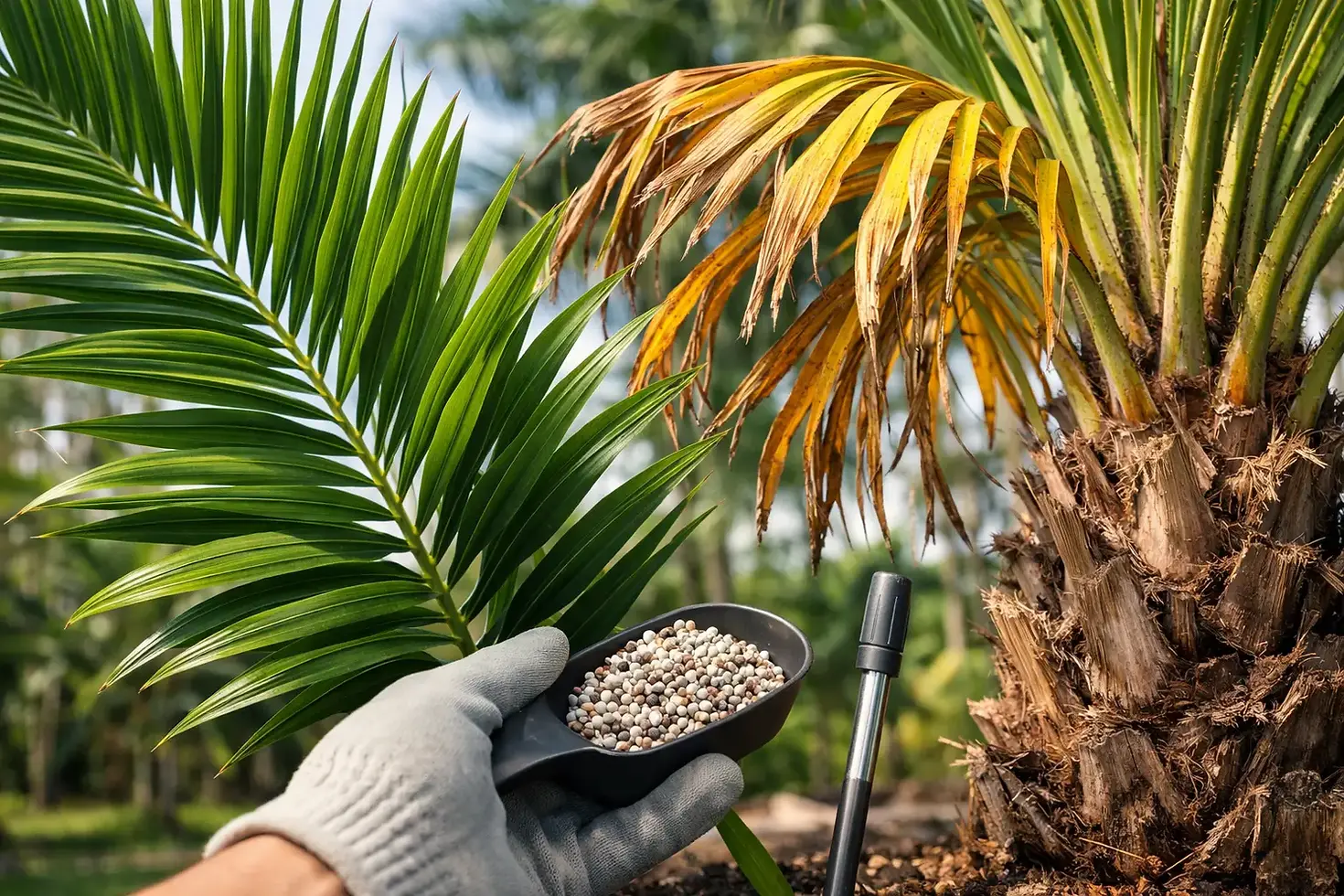
Palm Tree Nutrient Deficiencies and What to Do
- Ignite Fareal
- 6 days ago
- 6 min read

A palm with yellow, spotted, or ragged-looking fronds can quickly make an otherwise well-kept property look neglected. More importantly, palm tree nutrient deficiencies can reduce a palm's ability to handle heat, wind, pests, and disease. In Clearwater and throughout Tampa Bay, sandy soils, heavy summer rain, irrigation patterns, and years of improper fertilization all contribute to nutrient problems.
The visible symptoms are often mistaken for a disease or a need for more water. Sometimes that is true. But palms use nutrients differently than many shade trees, and applying the wrong product or pruning too aggressively can make the problem worse. A careful diagnosis protects the palm, your landscape investment, and the safety of the area beneath it.
Why Nutrient Problems Are Common in Florida Palms
Florida's sandy soils drain quickly and do not hold nutrients well. Frequent rain can move soluble nutrients below the active root zone, while over-irrigation can have a similar effect. Palm roots also extend well beyond the trunk, so fertilizer placed in a small ring around the base may not reach enough of the root system.
Not every yellow palm is underfed. Root damage from construction, compacted soil, poor drainage, cold stress, pests, and certain diseases can produce similar symptoms. Nutrient deficiencies are most likely when the symptom pattern follows a consistent progression through the fronds rather than appearing as isolated damage.
A palm's age matters, too. Some older fronds naturally fade and eventually die as new leaves emerge. The concern begins when multiple fronds are declining early, new growth is distorted, or the canopy is becoming thin.
Common Palm Tree Nutrient Deficiencies
Potassium deficiency
Potassium deficiency is one of the most serious and common issues in landscape palms. It usually begins on the oldest fronds, where leaflets develop yellow, orange, brown, or translucent spotting. The tips may turn necrotic, and the fronds can appear frizzled or scorched before dying prematurely.
Because potassium can move from older leaves into new growth, removing affected green fronds too soon may deprive the palm of nutrients it is still using. Unless a frond creates a safety concern or is completely brown, it is generally better to leave it in place while the underlying deficiency is corrected. Severe potassium deficiency can weaken the canopy over time and may become fatal in susceptible palms.
Magnesium deficiency
Magnesium deficiency typically appears on older leaves as broad yellow bands along the outer edges of the leaflets, with a greener strip down the center. It is especially noticeable on queen palms, date palms, and some fan palms.
Magnesium deficiency often develops slowly. It may not kill a mature palm quickly, but it can leave the tree permanently sparse and unattractive if left untreated. Epsom salt is frequently suggested as a quick fix, but it is not a balanced palm nutrition program and can create further imbalance when used without a plan.
Manganese deficiency
Manganese deficiency affects the newest emerging leaves, not the oldest ones. New fronds may emerge weak, yellow, streaked, curled, or with ragged, dead leaflet tips. In severe cases, the palm develops what arborists call frizzle top.
This condition is particularly urgent in queen palms and some other species. Once the growing point is seriously damaged, recovery may not be possible. Manganese deficiency is sometimes confused with magnesium deficiency, but the location of the symptoms is a key distinction: magnesium shows first on older leaves, while manganese affects new growth.
Iron deficiency
Iron deficiency also appears on new leaves, often as pale yellow or nearly white growth with greener veins. However, iron is not always absent from the soil. It may be unavailable to the palm because of poor drainage, damaged roots, excessively high soil pH, or a planting site that stays too wet.
Adding iron without correcting the root-zone issue may provide little benefit. This is why a site assessment matters before applying products repeatedly.
Nitrogen deficiency
Nitrogen deficiency causes an overall pale green or yellow appearance, usually starting with the oldest foliage and moving upward. The entire palm may look washed out rather than spotted or banded. It can occur when palms receive little fertilizer, when turf fertilizer is the only nutrient source, or when heavy rain has leached nutrients from the soil.
Nitrogen alone is rarely the right answer for a declining palm. High-nitrogen lawn products can push soft growth while failing to supply the potassium, magnesium, and micronutrients palms need.
How to Tell a Deficiency From Disease or Stress
Start by looking at which fronds are affected. Older-frond symptoms often point toward potassium, magnesium, or nitrogen concerns. Symptoms concentrated in the newest spear and emerging leaves raise concern for manganese, iron, bud damage, or disease.
Next, consider the pattern. Nutrient deficiencies tend to appear across multiple fronds in a predictable way. Disease damage may be more uneven, may include lesions or one-sided wilt, or may progress unusually fast. Pest activity can leave chewing damage, webbing, frass, or visible insects, while irrigation problems often affect several plants in the same part of the landscape.
The central spear deserves special attention. If it pulls out easily, smells foul, turns dark, or fails to open normally, the palm may have a bud or crown problem rather than a simple fertilizer issue. Avoid climbing, cutting, or pulling on the crown. A damaged palm can drop heavy fronds, and some crown problems need prompt professional evaluation.
Correcting Palm Nutrition Without Causing More Harm
The best fertilizer program depends on palm species, soil conditions, irrigation, surrounding turf, and the severity of the symptoms. For many established landscape palms in Florida, a controlled-release palm fertilizer with a balanced analysis that emphasizes potassium and includes magnesium and micronutrients is appropriate. Products designed for palms are preferable to general lawn fertilizer.
Many Florida palm care programs use an analysis close to 8-0-12-4Mg with micronutrients, applied according to the product label and the palm's size. That does not mean every palm needs the same formula or application rate. A palm planted in alkaline fill soil, for example, may need a different approach than one growing in sandy native soil.
Spread granular fertilizer evenly over the active root zone, which extends well beyond the trunk and often beyond the canopy edge. Keep fertilizer away from the trunk itself, then water it in as directed. Fertilizer spikes and concentrated piles can damage roots and distribute nutrients too narrowly.
Do not try to correct a severe deficiency with frequent, heavy applications. Excess fertilizer can burn roots, contaminate nearby waterways, and create nutrient imbalances. Slow, consistent correction is safer than a dramatic one-time dose.
Pruning Decisions Matter
A yellow or spotted frond is not automatically a dead frond. Palms can reclaim nutrients from living older leaves, especially during potassium deficiency. Removing every imperfect frond for cosmetic reasons may leave the palm with less energy and fewer nutrient reserves.
Remove fully brown, broken, hanging, or hazardous fronds when needed. Avoid over-pruning into a tight "hurricane cut" shape. This practice can stress the palm, expose it to sun damage, and make the canopy more vulnerable in windy weather. It also does not make a palm safer during a storm.
When large fronds are over roofs, walkways, driveways, or pool areas, pruning should be handled with proper equipment and a plan for safe cleanup. The risk is not limited to the frond itself. Falling debris, hidden decay, and nearby power lines can turn routine palm maintenance into a property hazard.
When to Call a Certified Arborist
A professional assessment is especially valuable when new growth is distorted, the central spear is affected, the palm is declining rapidly, or multiple palms are showing symptoms. A certified arborist can separate nutrient issues from disease, pest pressure, root damage, and irrigation problems before you invest in treatments that may not address the cause.
For property owners in Tampa Bay, Campbells Noble Tree Service can assess palm health concerns, recommend practical next steps, and handle hazardous frond removal with safety and cleanup in mind. Early evaluation is often less costly than waiting until a weakened palm becomes a removal concern.
A healthy palm should produce a full canopy of properly sized fronds over time, not just survive from one season to the next. Watching where symptoms begin, using palm-appropriate nutrition, and avoiding unnecessary pruning gives your palms their best chance to remain strong, attractive, and dependable parts of the landscape.


Comments