


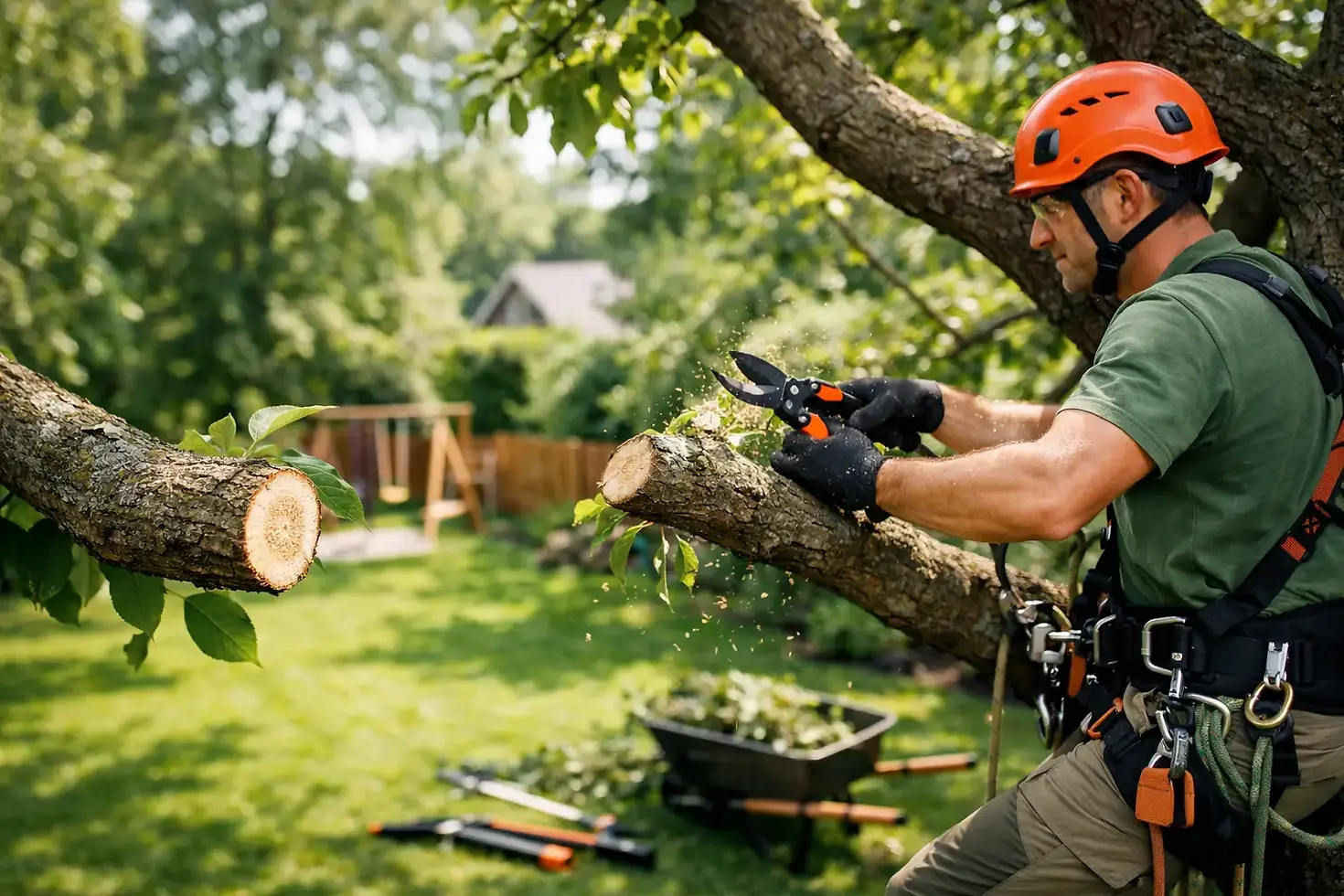
Tree Pruning for Safer, Healthier Yards

A low branch over the driveway might seem harmless until a storm rolls through or a delivery truck clips it on the way out. That is usually when tree pruning moves from a nice-to-have task to a real property concern. Done correctly, pruning helps reduce risk, improve structure, and support the long-term health of your trees without taking away the shade and character that make a yard feel established.
For homeowners and property managers, the challenge is knowing what should be cut, what should stay, and when the work calls for a trained eye. Pruning is not just about making a tree look neater. Every cut affects how that tree grows, how it responds to weather, and how safe it is around roofs, vehicles, walkways, fences, and utility areas.
What tree pruning actually does
Good pruning has a clear purpose. Sometimes that purpose is safety, such as removing dead limbs, broken branches, or growth hanging too close to a structure. Sometimes it is about tree health, like taking out diseased wood or thinning crowded interior branches so air and light can move through the canopy. In other cases, pruning helps shape younger trees so they develop stronger branch structure over time.
That last point matters more than many people realize. A mature tree with poor structure can become expensive and hazardous later. Weak branch unions, crossing limbs, and unbalanced growth often start as small issues. Early pruning can prevent larger failures down the road.
Appearance is part of the picture too, but appearance should follow sound arboriculture, not replace it. A tree that looks trimmed but has been overcut may be less stable, more vulnerable to sunscald, and more likely to produce weak regrowth. Clean lines matter, but health and safety come first.
When tree pruning is needed
Not every tree needs routine cutting every year. The right schedule depends on the species, age, condition, location, and how close it is to targets like homes, driveways, pools, or pedestrian areas.
A few signs point to a need for pruning. Deadwood in the canopy is an obvious one. So are limbs rubbing against each other, branches extending over the roof, low clearance over sidewalks or parking areas, and dense growth that traps moisture and blocks airflow. Trees that have taken storm damage often need corrective pruning as well, especially if cracked, hanging, or partially failed limbs are still in place.
In Florida landscapes, timing can be shaped by storm season as much as by growth cycles. Preventive pruning before severe weather can reduce the chance of branch failure, but aggressive cutting right before a storm is not the answer either. Heavy canopy reduction can stress a tree and create poor regrowth if the work is not done with care.
The difference between helpful pruning and harmful cutting
One of the biggest misconceptions is that more cutting means more safety. In reality, too much removal can do the opposite. Over-pruned trees often respond by sending out fast, weak shoots that are poorly attached. That can create a future hazard instead of solving one.
Topping is a common example of harmful cutting. This is when large sections of the crown are cut back bluntly to stubs or lateral branches too small to support proper growth. Topping can leave the tree stressed, misshapen, and more susceptible to decay. It also tends to trigger dense regrowth that becomes difficult to manage.
Proper pruning uses intentional cuts at the right locations. That means removing dead, damaged, diseased, or poorly placed branches while preserving the tree's natural form. It also means understanding branch collar cuts, weight reduction where appropriate, and species-specific response. A live oak, a maple, and a crape myrtle do not all respond the same way to the same pruning approach.
Why mature trees need a careful approach
Large, established trees add major value to a property, but they also require more judgment. A mature tree can have hidden decay, unbalanced canopy weight, or limbs extending over structures where there is little room for error. Cutting in the wrong place or removing too much from one side can affect stability and appearance for years.
This is where experience matters. Certified arborists assess the whole tree, not just the obvious branch. They look at species characteristics, signs of stress, structural defects, previous pruning wounds, and the surrounding targets. That broader view helps determine whether pruning will solve the problem or whether the tree needs deeper evaluation.
For property owners, the practical takeaway is simple. If the tree is large, close to the home, storm-damaged, or showing signs of decline, it is better to get a professional assessment than to guess.
Safety is the real reason many people call
Most service calls are not about perfection. They are about concern. A branch is hanging over the garage. Limbs are brushing the roof. The canopy has gotten too low over the driveway. A tenant reported falling debris. Those are real property management issues, not cosmetic ones.
Pruning can reduce liability by improving clearance, removing dead or unstable limbs, and correcting obvious structural problems where possible. It can also help protect roofs, gutters, screens, vehicles, and fenced areas from repeated branch contact.
Still, there are limits. Pruning cannot always make a compromised tree safe enough to keep. If a tree has advanced decay, major root issues, or severe structural failure, removal may be the more responsible recommendation. A trustworthy tree care company will say that plainly instead of promising that every tree can be saved.
What homeowners can handle and what they should not
There are light maintenance tasks some property owners can handle, such as removing a small broken branch from a young ornamental tree or clipping minor growth well within reach from the ground. Even then, clean cuts and proper tools matter.
What should not be treated casually is anything involving ladders, chainsaws, heavy limbs, utility lines, storm-damaged wood, or work over structures. Those situations create a high risk of injury and property damage. They also increase the chance of poor pruning cuts that harm the tree.
Professional crews bring more than cutting tools. They bring climbing systems, rigging, safety protocols, aerial equipment when needed, and trained judgment on how the tree will react once weight is removed. They also handle debris and cleanup, which is often a bigger part of the job than people expect.
Tree pruning and tree health go together
Pruning is often one part of a larger tree care plan. If a tree is struggling with pests, disease, poor soil conditions, root disturbance, or repeated storm stress, cutting alone will not fix the issue. In some cases, pruning helps by removing affected limbs and improving airflow. In others, the tree needs diagnosis and treatment as well.
That is another reason a certified arborist approach is valuable. The goal is not just to cut what looks bad. It is to understand why the tree is declining or becoming hazardous in the first place.
For local properties with mature trees, that broader perspective can protect both the landscape and the budget. Timely pruning is usually far less disruptive than emergency work after a large limb failure.
How to know you are hiring the right team
A good tree pruning service should be able to explain the purpose of the work in clear terms. You should hear why certain limbs are being removed, how much canopy will be affected, what risks are involved, and what outcome to expect. Vague promises to make the tree smaller or cleaner are not enough.
Look for a company that prioritizes safety, uses trained crews, and understands arboriculture rather than treating every job like rough cutting. Cleanup should also be part of the process. Professional tree care should leave the property safer and cleaner, not scattered with brush and sawdust.
For many homeowners in the Tampa Bay area, weather is part of the equation. That makes responsive service and sound recommendations especially important. When pruning is done with skill and restraint, trees are more likely to hold their structure, recover well, and continue adding value to the property.
A well-pruned tree should not look butchered or stripped. It should look natural, balanced, and better prepared for the conditions around it. If you are unsure whether a tree needs light maintenance or a more careful structural assessment, that is the right moment to ask for expert guidance before the next storm, the next branch drop, or the next close call.


Comments