


How to Identify Hazardous Limbs Before They Fall
- Ignite Fareal
- Jul 24
- 6 min read

A limb does not have to fall during a hurricane to cause serious damage. In Clearwater and across Tampa Bay, a heavy branch can fail on a calm afternoon after months of decay, root stress, or unnoticed storm damage. Knowing how to identify hazardous limbs gives property owners a chance to protect people, roofs, vehicles, fences, and the tree itself before a manageable issue becomes an emergency.
The safest assessment begins from the ground. Do not climb a tree, lean a ladder against unstable limbs, or try to cut a branch that is hanging, cracked, or near a utility line. A certified arborist can inspect structural concerns up close and determine whether selective pruning, cabling, treatment, or removal is the responsible next step.
How to Identify Hazardous Limbs From the Ground
Start by looking at where each major limb connects to the trunk. A strong branch attachment usually has a visible branch collar, the slightly raised area where the limb meets the trunk. Trouble often appears at tight V-shaped unions, especially when two stems are similar in size. These attachments can trap bark between the stems, creating what arborists call included bark. The stems may look solid for years, but they can split apart under wind, rain, or the added weight of wet foliage.
Large limbs that extend far beyond the tree's natural canopy also deserve attention. A long, heavy branch is not automatically hazardous, but weight concentrated at its outer end puts greater leverage on the attachment point. If that limb grows over a driveway, roof, play area, patio, or neighboring property, the consequences of failure are higher. Proper reduction pruning may lessen the load while preserving the tree's shape and health.
Dead wood is one of the clearest warning signs. Dead limbs may have no leaves when the rest of the tree is in season, brittle twigs, peeling bark, or a gray, dry appearance. In Florida, some trees naturally shed leaves or go through seasonal changes, so leaf loss alone is not proof of death. Look for several signs together, particularly brittle branch tips and bark that separates easily from the wood.
A hanging or broken limb requires prompt professional attention. Even if it is caught in the canopy and appears stable, wind can shift it without warning. Keep people, pets, and vehicles out of the area below it. This is especially urgent when the limb is suspended over a sidewalk, entryway, pool enclosure, or parking area.
Cracks, Splits, and Fresh Wounds
A visible crack on the top, underside, or base of a limb should never be ignored. Some cracks are old and may have formed protective wood around the edges, but fresh splits with exposed light-colored wood can signal an active failure. A crack that opens and closes in the wind is particularly concerning.
Also watch for bark that is lifting around a branch union. This can indicate that the connection is separating. Fresh wounds from a vehicle strike, construction equipment, lightning, or a previous storm can weaken a limb even when it remains green and leafy. The exterior may look minor while internal fibers have been damaged.
Do not try to test a cracked branch by pulling on it. Added movement can cause the limb to fail. Take a clear photo from a safe distance if possible, then arrange an assessment.
Decay Is Often Hidden Inside
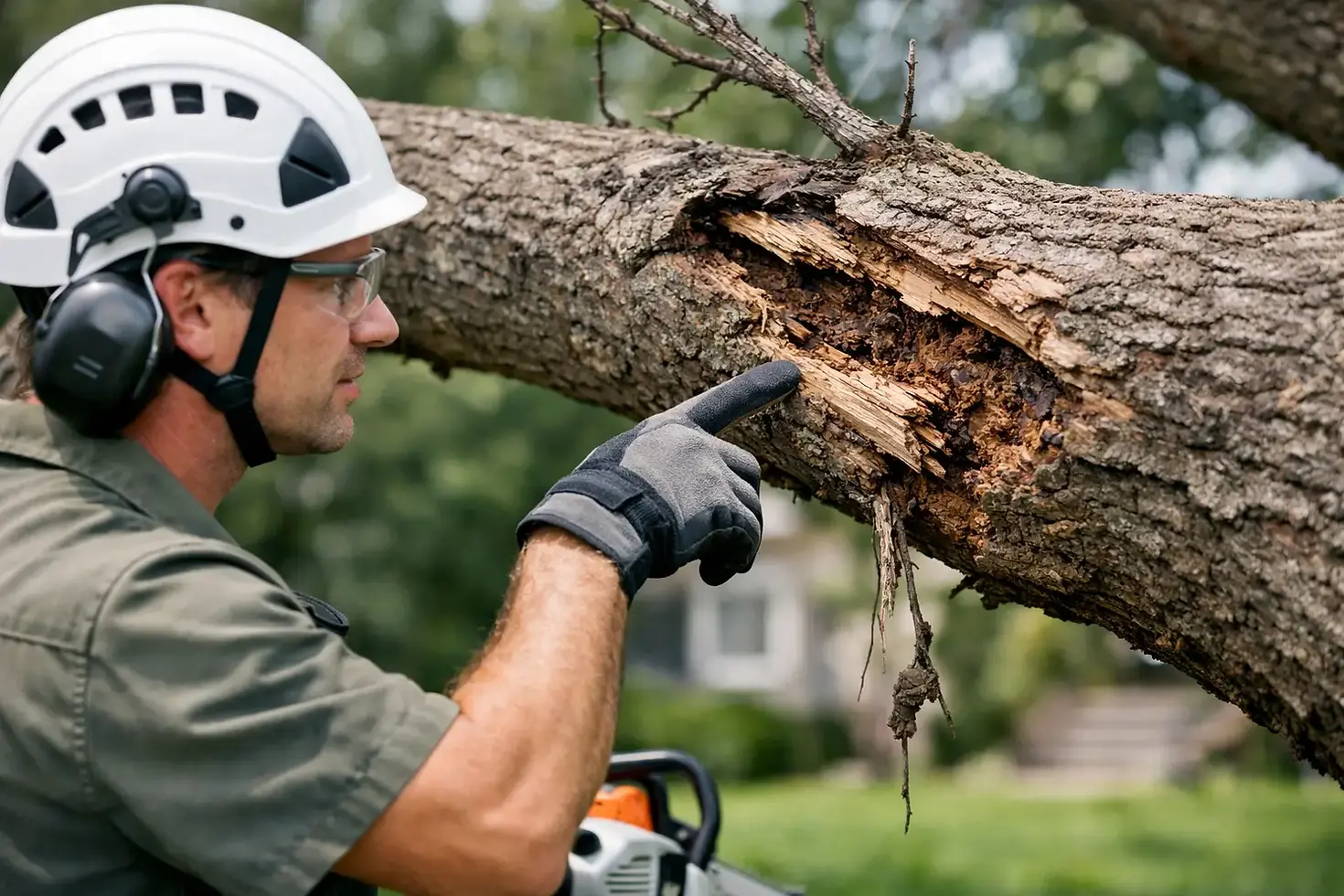
Decay can be difficult for homeowners to judge because a branch may remain alive while the wood inside is weakening. Still, there are visible clues. Mushrooms or conks growing on a limb or at its connection to the trunk can indicate wood decay. Cavities, soft areas, hollow-sounding wood, and large sections of missing bark also call for closer evaluation.
Not every mushroom means a branch will fail immediately, and not every hollow tree needs removal. The risk depends on the location and extent of decay, the species and condition of the tree, the size of the affected limb, and what sits beneath it. That is why an arborist assessment is more useful than treating one symptom as an automatic verdict.
Warning Signs After Storms and High Winds
Tampa Bay storms can expose problems that were already developing. After high winds, walk your property carefully from the ground and look upward before walking beneath the canopy. Newly tilted limbs, torn branch attachments, stripped foliage, and branches resting on other branches are all reasons to schedule an inspection.
Pay close attention to trees that have changed shape. A canopy that suddenly looks lopsided may have lost structural support or shifted under wind load. New gaps in the crown can reveal broken limbs still lodged overhead. A branch that has dropped several smaller twigs may also have sustained a larger crack farther up.
Trees near utility lines require extra caution. If a limb is touching, leaning on, or has brought down a power line, stay far away and contact the utility provider or emergency services as appropriate. Never attempt to move the branch yourself, even if the line appears inactive. Electricity can travel through wood, water, soil, and nearby objects.
Tree Health Problems That Can Create Limb Hazards
Hazardous limbs are not always caused by a single storm. Root damage, pests, disease, poor pruning, and soil changes can slowly reduce a tree's ability to support its canopy. A limb that once grew vigorously may begin to decline after construction compacts soil, a drainage pattern changes, or roots are cut near the tree.
Look for thinning foliage, undersized leaves, premature leaf drop, dieback at branch tips, or multiple dead branches in the same section of the tree. These symptoms do not identify the cause on their own, but they tell you the tree needs professional attention. Insects and diseases can affect particular species differently, and the right response may range from monitoring to targeted treatment, pruning, or removal.
Previous topping is another common issue. Cutting major limbs back to stubs can trigger weak, fast-growing shoots that attach poorly to the remaining wood. Those shoots may eventually become large enough to fail. A tree that has been aggressively topped or improperly pruned benefits from a long-term structural pruning plan rather than another round of indiscriminate cutting.
Assess the Target Beneath the Limb
Risk is not just about whether a limb could fail. It is also about what it could hit. A small dead branch over an unused corner of a yard may need routine pruning. The same branch over a front walk, child’s swing set, parked car, or roof deserves faster attention.
Consider how your property is used throughout the week. A branch over a driveway may be a higher concern when tenants, visitors, or service providers regularly park there. A limb near a screened enclosure can cause costly damage even if it is not especially large. For landlords and property managers, documented inspections and timely correction also help reduce preventable liability concerns.
When to Call a Certified Arborist
Call for a professional assessment promptly when you see a hanging limb, fresh split, large dead branch, decay around a major attachment, canopy damage after a storm, or a limb threatening a structure or travel area. If there is an immediate threat to people, property, or utilities, treat it as an emergency and keep the area clear.
A certified arborist does more than remove the obvious branch. They evaluate the tree's overall structure, identify the cause of the problem, and recommend work that balances safety with tree health. In some cases, careful pruning can reduce risk and retain a valuable mature tree. In others, the safest option is removal because decay, poor structure, or repeated failure has made preservation impractical.
Avoid hiring based only on the promise of the fastest or cheapest cut. Tree work around large limbs requires trained crews, proper equipment, insurance, and a plan for protecting nearby structures. Responsible service also includes complete cleanup, so the hazard is removed without leaving your property with an unsafe mess.
A quick ground-level check after storms, before hurricane season, and whenever you notice changes in a tree can prevent difficult surprises. If a limb looks questionable, trust that instinct and have a qualified professional inspect it. Campbells Noble Tree Service LLC can help property owners make a clear, safety-focused decision before the next weak branch has a chance to fall.


Comments